
Home Care
After the Storm: Getting a DFW Property's Exterior Back to Normal
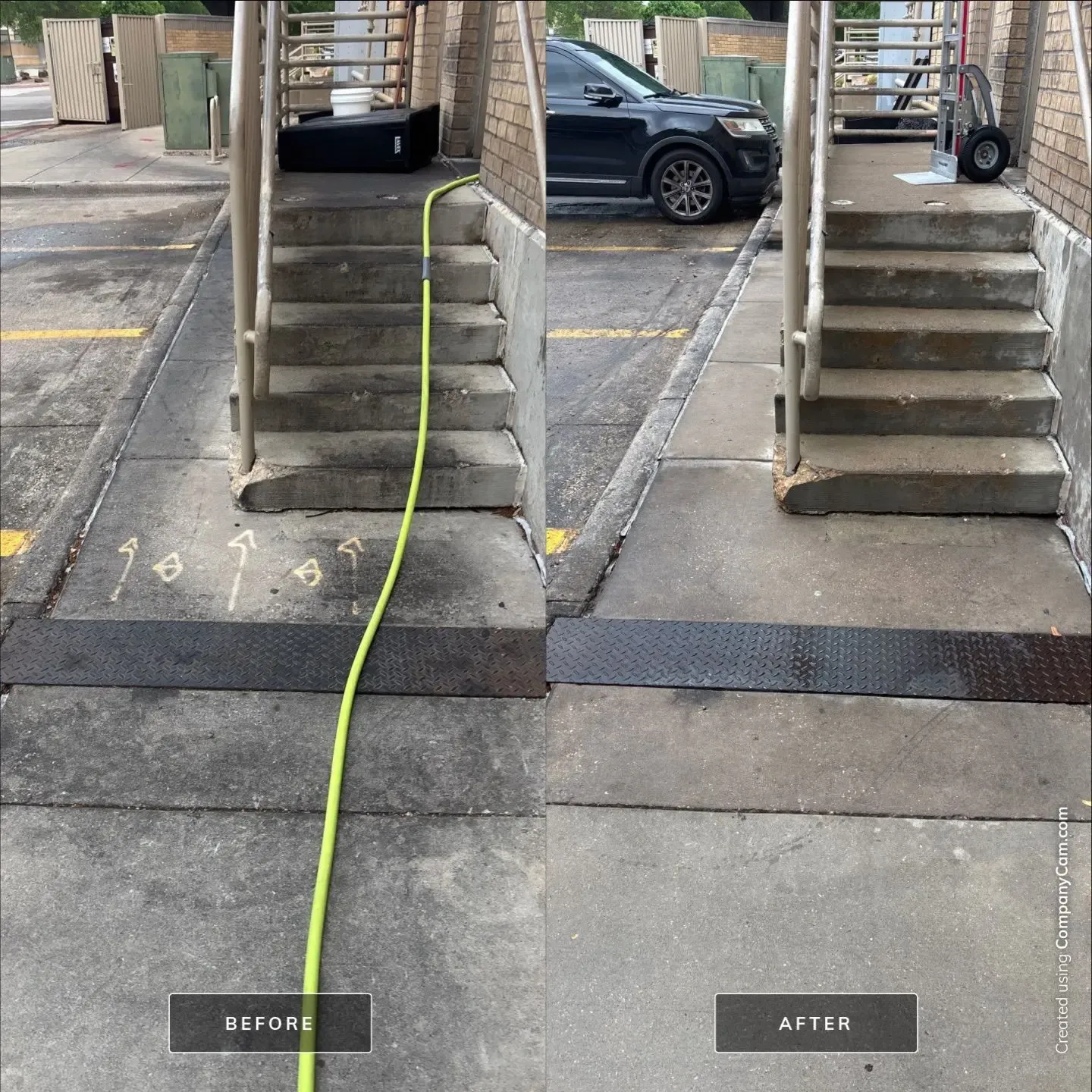
North Texas storm season leaves a signature on every hard surface it touches: silt lines across driveways where water ran, mud fans at the bottom of slopes, leaf litter packed into corners and against curbs, and the gray-brown film a hard rain splashes up along the base of walls. None of it is structural, but all of it stains if it sits, and the Texas heat that follows a storm accelerates exactly that. Here is the practical order of operations for putting an exterior back.
First: walk it and photograph it
Before anything gets cleaned, walk the property and photograph anything that looks like damage rather than mess: dents, cracks, torn screens, displaced fixtures. Cleaning is maintenance, but if the storm did real damage, the photos preserve the property’s condition as the weather left it, and every insurance conversation goes better with records than without them. Document first, clean second is the professional order on any property where a claim might follow.
What storms actually leave behind
- Silt and mud where water flowed and pooled, printing lines and fans across flatwork as it dries
- Organic litter, leaves, twigs, and live oak debris, packed into corners, drains, and fence lines
- Splash-up staining along the first foot of walls, where rain hammered soil against brick and siding
- Drain and scupper blockages that leave water standing on patios, pads, and garage decks
- Wind relocation: everything light that used to be somewhere else, now on your property
The mess is cosmetic for about a week. Then the chemistry starts: tannins from leaf litter and the minerals in mud begin transferring into porous concrete, and what would have rinsed off cleanly becomes brown staining that needs dedicated treatment. Debris cleared promptly leaves nothing behind; debris left through a hot month can leave shadows that only lighten.
The cleanup, in order
- Clear the loose material from flatwork, corners, and especially drains, so wash water has somewhere to go.
- Check where water stood. Standing-water rings on patios and pool decks, and silt in garage corners, mark the drainage problems worth fixing before the next storm.
- Wash the flatwork. Driveway and concrete cleaning takes the silt lines and mud fans off with a surface cleaner for an even finish, with tannin staining treated as its own step.
- Rinse the splash line. The soil band along wall bases comes off with a gentle wash; soft wash house cleaning handles it where the wall material rules out pressure.
- Reset the outdoor spaces. Patio and deck cleaning and pool deck cleaning clear what the storm dropped where people actually sit, including the slick film wet debris leaves on smooth surfaces.
Commercial properties: the same job, with tenants watching
Retail centers, offices, and communities carry the extra pressure of customers seeing the mess. Storm cleanup on commercial sites runs the same order at property scale: drains and parking lots first so the site functions, then sidewalks and storefronts so the customer path reads as recovered, then the detail work. Properties already on a recurring exterior schedule usually just pull their next visit forward, which is one more quiet argument for having a schedule at all.
Storms are a rhythm here, not an event
North Texas gets its severe weather in seasons, which means storm cleanup belongs in the maintenance calendar rather than the emergency budget. The season-by-season cleaning guide covers where post-storm resets fit in the year, and the HOA notice guide covers the letters that sometimes follow a storm-scruffy month. For a cleanup scoped to what the last storm actually left, request a free quote or call (214) 764-5913. Surface Pro Power Wash is an exterior cleaning company based in Plano, TX.