
Home Care
Cleaning Up After Pollen Season: Why DFW Exteriors Turn Green by Summer
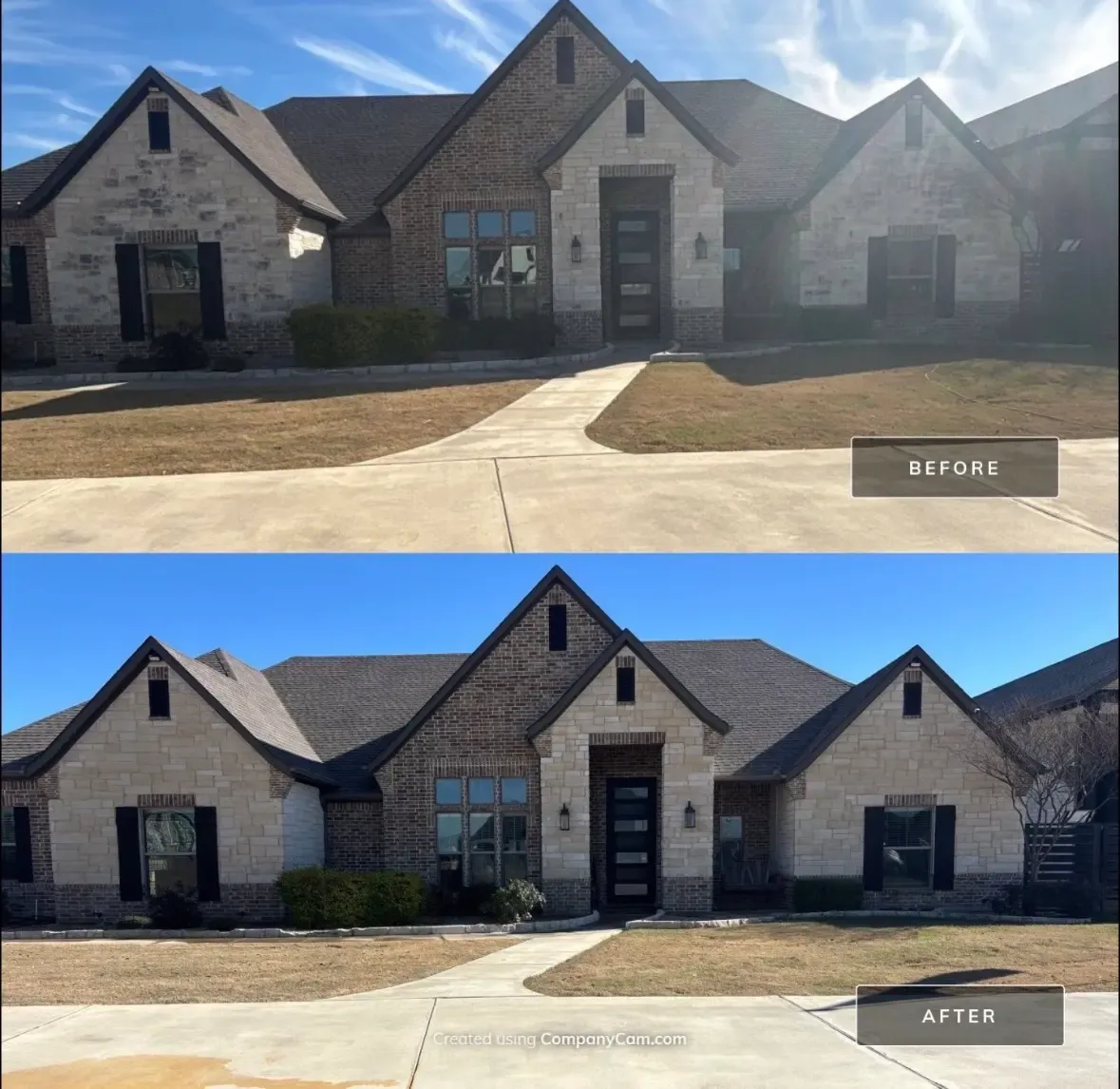
Every spring, North Texas gets its yellow-green dusting: cars, patios, pool decks, window sills, and every wall that faces the wrong way. Most of it is oak pollen, and the drop runs heavy from late March into early May. The film is annoying, but the film is not the real problem. The real problem is what it feeds.
Pollen is fertilizer for the green stuff
Pollen is organic material. When rain and sprinklers wash it off the obvious surfaces, it does not vanish, it collects: into shaded corners, along the north side of the house, behind shrubs, in the texture of stucco and brick, at the base of fences. Add DFW humidity and the warm months, and that collected material becomes food for algae and mildew.
This is why so many exteriors that looked fine in April are visibly green by July. The pollen fed the growth through late spring, the humidity sustained it, and the shaded walls never dried out enough to stop it. The green film on a north-facing wall in August usually got its start as the pollen nobody cleaned off in May.
What pollen season leaves on each surface
- Siding, brick, and stucco: a film that dulls the color and seeds algae in the texture, worst on shaded and north-facing elevations
- Driveways and walkways: pollen washed into the concrete’s pores along with spring mud and silt lines from storm runoff
- Patios and pool decks: the film plus everything spring storms delivered, right when outdoor season starts
- Storefronts and commercial walkways: the film customers see at eye level, tracked and rained into the concrete underfoot
The post-pollen reset
The efficient move is one deliberate cleaning at the tail end of the drop, late spring for most properties. Cleaning mid-drop is cosmetic: the film returns within days. Cleaning after the drop removes the accumulated pollen and the young growth it fed in the same visit, and the exterior goes into the humid months clean instead of seeded.
The method matters as much as the timing. The walls want soft wash house cleaning, where the solution removes the film and kills the growth at the root; pressure on siding or brick just redistributes the problem while risking the surface, as the pressure washing safety guide covers in detail. The flatwork wants driveway and concrete cleaning with a surface cleaner, and pool surrounds want pool deck cleaning matched to the deck surface, so the outdoor season starts with traction instead of slick film.
Why skipping the reset costs more later
Growth that establishes over summer does not stay cosmetic. Algae holds moisture against surfaces, mildew spreads into textures that get harder to fully clean, and by fall the job has moved from removing a film to restoring a surface. Restoration takes longer, uses more treatment, and costs more than maintenance, which is the practical argument for making the post-pollen cleaning an annual rhythm rather than an occasional rescue. Where that rhythm fits in the rest of the year is covered in the season-by-season timing guide.
Commercial properties: the season customers see
Retail centers, offices, and community entrances collect the same film, at eye level and underfoot, right as spring foot traffic picks up. Storefront glass surrounds, entry walkways, and monument signs all read as neglected under a pollen film, and the fix is the same reset on a commercial scale: walls and signage soft washed, walkways and parking areas surface cleaned, scheduled around business hours.
Book the reset
The end of pollen season is the single highest-value cleaning window on the DFW calendar. For a reset scoped to your property, request a free quote or call (214) 764-5913. Surface Pro Power Wash is an exterior cleaning company based in Plano, TX, serving the Dallas-Fort Worth metro.